
Grammy-Award Finalist Topher Keene is widely regarded as one of America’s top Acting, Singing, and Public Speaking Coaches.
From teaching kids to sing their first solo, to helping Film and Television Stars perfect their roles, to helping pro Vocalists record hit albums, to helping YouTubers and Podcasters refine their vocal skills, to helping CEOs and Executives improve communication and presentation skills, Topher Keene can help anyone develop a powerful and confident voice and improve their performance skills.
Advanced Vocal Technique for Musical Theater Performers
Musical theater singing is the most technically demanding vocal discipline currently practiced at high volume on commercial stages. A modern musical theater performer is expected to belt like a pop singer in one show, sing legit operetta in the next, and switch styles within a single audition. That level of versatility is not natural. It is built through years of deliberate technical work, almost none of which is taught in standard college voice programs.
How to Find Your Mixed Voice: The Bridge Between Chest and Head Voice Every Singer Needs
Most singers spend years stuck in the same place. They've got a serviceable chest voice for the bottom of their range. They've got a head voice they can float through up top. But somewhere in the middle, the wheels come off. They yell up into chest until the cords give out, or they flip into a thin, breathy head voice that disappears in a band mix. The notes between those two registers — the most useful real estate in your entire voice — feel like a no-man's-land they're not allowed to enter.

The Singer's Guide to Building a Stronger Chest Voice (and the Daily Routine That Actually Works)
This is the single most useful thing you can do as a developing singer. Put your hand on your chest. Now, call out to an imaginary friend across the street: "Hey!" Feel that deep buzz in your chest? That's chest voice. That's the thyroarytenoid muscle doing its job. Heavy, thick, grounded.

How to Belt Safely: A Vocal Coach's Guide to Powerful High Notes Without Strain
Belting isn't a louder version of yelling. It's a coordinated mix with chest voice weight extended into your upper range, supported by breath and balanced by acoustic placement. That sentence is the entire framework. Everything else is execution.

What Smart Singers Do When Audition Season Slows Down
If you're a singer or musical theater performer, you know the rhythm: audition season heats up, you hustle, then everything goes quiet for a few months. Summer in a lot of markets — Phoenix included — can feel like a dead zone. Fewer shows going up, fewer calls coming in, and it's tempting to just coast until things pick back up in the fall.
Don't do that.

Stage Fright Isn't a Personality Flaw: A Vocal Coach's Playbook for Calming Your Nerves Before You Perform
There's an old study that gets cited in nearly every public speaking book ever written: more people are afraid of public speaking than are afraid of death. If they're at a funeral, they'd rather be in the casket than at the podium.
I have a related observation from twenty years of coaching singers, actors, speakers, and performers of every level. Singing is worse.
There's No "Right Key" for Your Voice — Here's How to Find the Best Key for Every Song
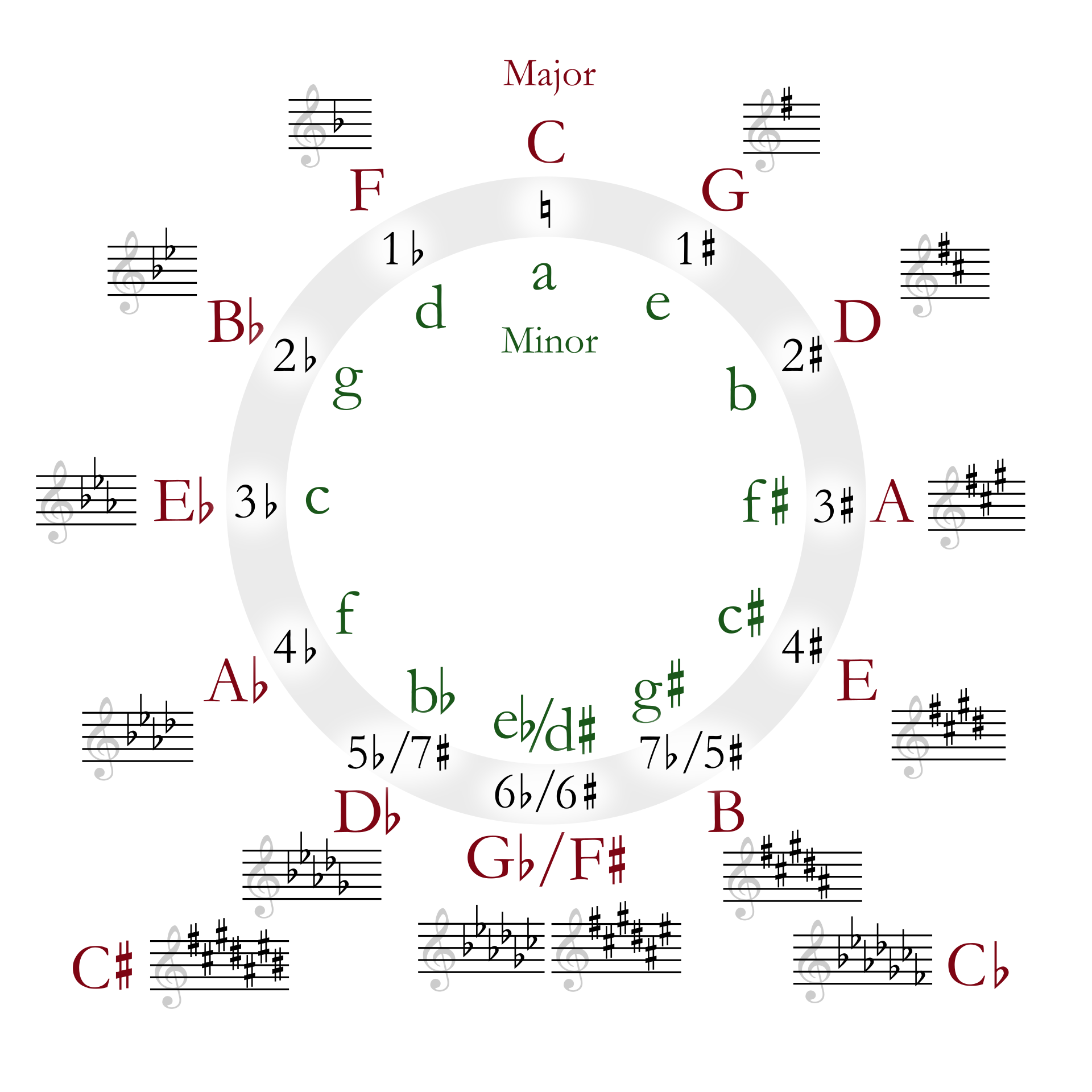
There is no single right key for you as a singer. You don't have one key that works for everything. You're not "a singer in the key of G." That's not how any of this works, and misunderstanding this concept holds more singers back than almost any other technical misconception I encounter.
What you have is a range. What every song has is also a range. Your job — every single time you approach a new piece of material — is to find the key where those two ranges overlap in the most comfortable, expressive, and vocally healthy way possible. And that key will be different for every song you sing.
How to Pick the Right 16-Bar Cut for Any Musical Theater Audition
If you've been to more than a handful of musical theater auditions, you've heard the same instruction. "Please prepare a 16-bar cut." Sometimes 32 bars. Sometimes a minute. Whatever the specified length, the meaning is the same: we don't have time to hear your whole song, and we want you to show us who you are in the smallest possible window.

Vibrato for Singers: Why It's Not Just a Technical Problem
If you've been chasing vibrato — watching tutorials, doing exercises, trying to manufacture that warm oscillation in your tone — I want to offer you a perspective shift that might save you months of frustration. Vibrato is often treated as a purely technical skill, something you build through specific drills and muscle training. And yes, technique matters. But in my experience coaching singers across styles, the biggest breakthroughs in vibrato almost never come from a new exercise. They come from something far less obvious.

Singing While Sick: What's Safe, What's Risky, and When to Cancel the Gig
Every working singer faces this dilemma eventually, and the stakes are real. You have a performance — a show, a wedding, a recording session, an audition — and you woke up sick. You've got a sore throat, or a head cold, or your voice sounds an octave lower than it should, or there's a deep cough you can't get rid of. You're now trying to make a decision in real time, often without the information you need to make it well: do I push through, or do I cancel?
Adult Beginner Singing Lessons: What to Expect When You Start Voice Training in Your 30s, 40s, or 60s
If you've been thinking about starting voice lessons but you keep talking yourself out of it because you're "too old," I want to settle that question right now. You aren't. I've taught beginners in their 30s, 40s, 50s, 60s, and 70s. I've had a 75-year-old come in with no singing experience whatsoever and walk out, months later, able to sing comfortably with their grandchildren. The adult voice is fully trainable. What's holding most adult beginners back is not their voice. It's the story they tell themselves about what their voice is allowed to do at their age.

Surviving a Three-Week Run: Vocal Health Strategies for Performers in Demanding Productions
The first time you're cast in a leading role with a multi-week performance run, reality sets in quickly. The audition was one performance. Maybe your callback added another. Then you booked the role and started rehearsals. By the time opening night arrives, you've been working the material for weeks. Then you have to deliver that material at full performance level, eight to twelve times across three weeks, while maintaining your job, your relationships, and your basic functioning as a human being.

How Female Singers Can Tackle Male-Written Songs
There's a frustrating reality for many female singers exploring contemporary musical theater repertoire: a huge percentage of the most exciting music is written for male voices.
The contemporary musical theater canon includes some of the most demanding, rewarding, vocally exciting material ever written for the stage. Songs from shows like Hadestown, Epic the Musical, Hamilton, and many others feature male leads with vocal lines that singers want to perform regardless of gender. The problem is that these songs are typically written for tenor or baritone voices and don't sit naturally for female singers used to alto or soprano repertoire.
How to Choose a Vocal Coach: The Questions to Ask Before Booking Your First Singing Lesson
Picking the right vocal coach is one of the highest-leverage decisions a developing singer or speaker can make, and it's also one of the easiest decisions to get wrong. The wrong coach will waste your time and money for months — or worse, teach you habits you'll spend years undoing. The right coach can compress years of fumbling into months of focused progress and become the most important professional relationship you have for as long as you keep training.

Returning to Singing After a Break: How to Rebuild Your Voice Without Starting Over
Welcome back to singing. The instrument is still yours. The communities are still there. The work begins now, from where you are, with whatever voice you have today.

Learning From Other Singers Without Copying Them: The Math Test vs. Essay Test Approach
Most singers learn by listening to other singers. You hear someone you admire, you study their work, and you absorb lessons about phrasing, technique, and style. This is how vocal traditions get passed down through generations, and it's an essential part of any singer's development.
The trap is when this listening becomes imitation. You stop learning from singers and start trying to become them. The result is a voice that sounds like an echo of someone else rather than a developed version of yourself.

5 Quick Tips for a More Beautiful Singing Voice
Whether you're just starting out or you've been singing for years, certain fundamentals consistently separate voices that sound effortful from voices that sound effortless. None of these tips are flashy. They're the basics that working singers come back to over and over because the basics are what actually carry your voice through every song you'll ever sing. Here are five quick wins that will make an immediate, audible difference in your sound.

The Hidden Skill of Singing Quietly: Why Quiet Voice Control Is Harder Than Belting
There's a counterintuitive truth that most developing singers don't believe at first: singing quietly is harder than singing loudly.
The instinctive assumption is the opposite. Loud singing feels like the impressive part. The big belt, the soaring high note, the powerful sustain that fills a room. Quiet singing seems like the easy default, the thing you do when you're warming up or when the song calls for something gentle.

The 4-6 Song Rule: Why a Small, Deeply-Drilled Repertoire Beats a Big, Shallow One
Most developing singers fall into one of two traps with their repertoire.
The first trap is collector syndrome: constantly adding new songs to their working list without ever fully mastering any of them. They have 30 songs they kind of know, can sort of sing, and would struggle to deliver convincingly on demand. Each song stays at 60% completion forever because they keep moving on to new material before any of it is truly finished.

Vocal Health for Singers: Why You Should See an ENT Before You Think You Need One
Let's talk about something that most singers avoid until they're in crisis: the health of your actual vocal instrument.
Every working singer eventually experiences some kind of vocal concern. A persistent hoarseness that won't quite go away. A strange crackle on certain notes. A sense that their voice "isn't quite right" even when they can't point to a specific problem. A lingering worry that maybe they've damaged something and don't know it.
For most singers, this worry hovers in the background while they keep working, keep pushing, and keep hoping it resolves on its own. They don't see a specialist because they're afraid of what might be found. Or because they don't know where to go. Or because they assume only professional opera singers see ENTs.